

I refuse to accept this moment as normal. The United States is in the middle of a massive, deadly, backbreakingly expensive war in the Middle East - a war opposed by 70 percent of Americans - and Congress has not taken one single vote to authorize it. It is an illegal, unconstitutional war that has made our nation dramatically less safe. And I believe that it is my responsibility as a United States Senator to do exceptional things to help bring it to an end.
So, as soon as the Senate recessed for the fall election season, I got on a plane and headed for the Middle East - the first Democratic Senator to visit the Gulf since the war began. What did I hope to accomplish? First, I wanted to see for myself the damage done to U.S. basing in the region and the impact of the war on our partner nations. When at war, I have found there is no substitute for going into the theater and seeing the conflict firsthand. Second, I wanted to hear from leaders in the region about the path to end the war, and their view of the mistakes the U.S. has made that have caused this disastrous war to drag on this long. Third, I wanted to bring some hard messages to our partners in the region about Trump’s corruption of foreign policy.
This is the behind-the-scenes account of my visit.
QATAR
Dinner with the negotiators
On Friday evening, I boarded a plane bound for Doha, Qatar. My plan was to spend a day in Doha, since the Qataris are the primary interlocutors between the U.S. and Iran. I would also travel to the largest U.S. base in the region, Al Udeid, located in Qatar. Al Udeid sustained significant damage from Iranian strikes, and if Americans are going to be asked to send billions of dollars for repairs, I wanted to see the damage with my own eyes.
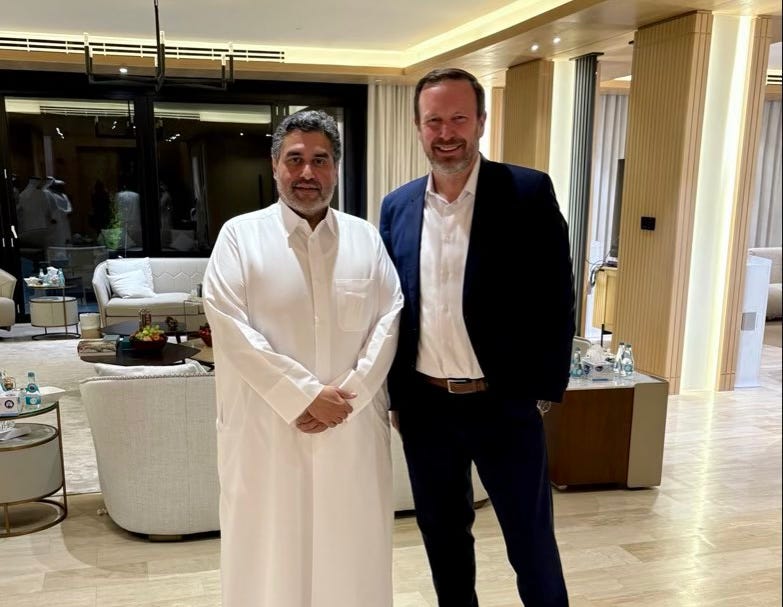
After a long flight, I had planned to simply meet with our U.S. Embassy officials upon my arrival Saturday night. But just before departing, I learned that Ali Al Thawadi, the Qatari diplomat who has been conducting shuttle diplomacy between the U.S. and Iran, wanted to host me for dinner to talk about the status of negotiations. Over a two-hour dinner, Al Thawadi told me that a deal to end the war was still possible, but if achieved, it would be limited in scope. It would reopen the Strait of Hormuz, provide Iran with significant sanctions relief (providing billions to the Iranian regime), and might include some small commitments to constrain their nuclear program. I told him that though that sounded like a terrible deal, I would support almost any deal to end the war since America’s security, treasury and reputation were hemorrhaging each day the war continued.
At the end of dinner, Al Thawadi started checking his phone more frequently and then somewhat abruptly suggested we take dessert in his sitting room. Was something breaking with the Iranians, I wondered? No, in fact. As we sat down in his living room, he pointed to the television.
“We are playing Saudi Arabia in the semifinals of the Gulf Cup! It’s gone to penalty kicks!”
For a few moments, he tried to keep the conversation going while watching the game, but the entire room was clearly and appropriately distracted by the game, as the Saudi goalkeeper made save after save. “Why don’t we just take a break and watch the game?” I suggested. After Qatar lost the game on penalty kicks (3-2), the mood quieted somewhat and I politely excused myself from a productive meeting that had run past three hours.
Meeting with the Emir
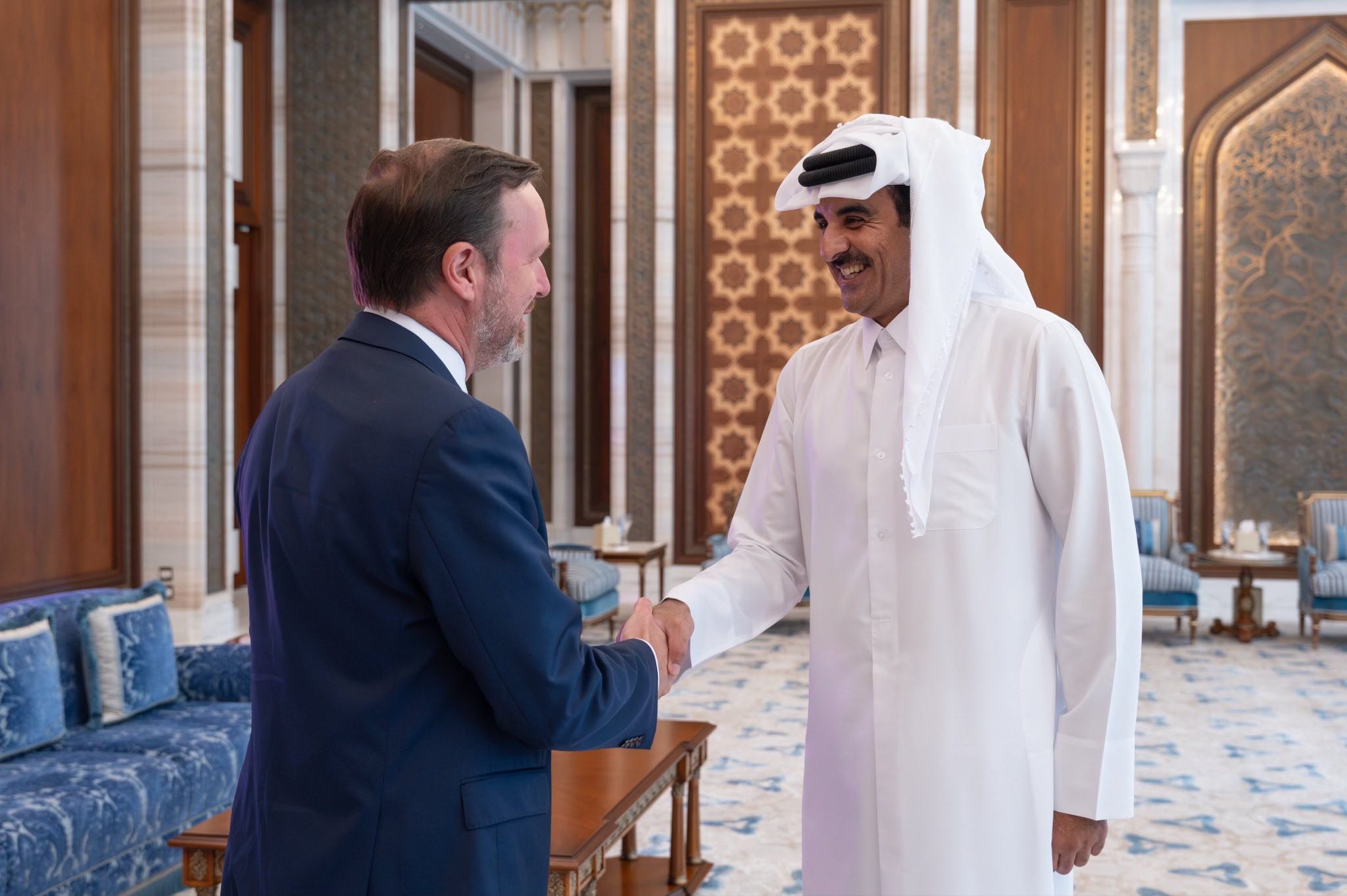
On Saturday, I conducted a series of meetings with Qatari officials, including the head of state, the Emir of Qatar Sheikh Tamim bin Hamad Al Thani. The Qataris have been uniquely helpful partners to the United States over the years. They often serve as mediators of conflicts, like they are now. They host 1,000 Afghan refugees, at our request. Al Udeid and its thousands of American troops are there. I thanked the Emir for this partnership, and we discussed regional issues, like Iran, Yemen and Lebanon.
But I also had another message to deliver: my deep concern over the gift of a Qatari luxury jet to President Trump - a jet Trump has promised to take for his personal use after he leaves office. The Emir defended the gift as intended for the U.S. government and noted that Qatar had not done anything illegal. I told him that though I know how much pressure Trump put on Qatar to deliver the gift, we had to have zero tolerance on the corruption of U.S. foreign policy. Last year, I actually forced a vote on the Senate floor to suspend military sales to Qatar as a consequence of the plane gift, and I warned him that Qatar’s relationship with the United States would be damaged by any actions to personally enrich Trump or his family. A gift of that size to the President of the United States is corruption, plain and simple. I left hoping that my message was heard.
The cover up
By the time I left this meeting, it had become clear that I would not succeed in fulfilling the primary purpose of my visit: going to the Al Udeid base to talk to U.S. military leaders and troops about the war, and see the serious damage done to the facility.
I have visited many active theaters of war during my time in Congress. This is my job: to do oversight over U.S. military operations overseas, especially during times of war. Congress - not the President - decides questions of war, and we cannot exercise our warmaking power or our power to appropriate or withhold funds for war without seeing it firsthand.
Previous presidents have been very serious about honoring our constitutional responsibility. I toured Baghdad with our troops in the middle of some of the most active fighting there. I helicoptered to forward operating bases in Afghanistan that were being targeted by daily Taliban attacks at the height of the Afghanistan War. Never before have I been denied access to visit our troops overseas during times of active war. But this president is no ordinary president.
I made several formal requests to see Al Udeid ahead of my visit. Then, three days before I departed, I spoke in person with the U.S. CENTCOM Commander in charge of the war, Admiral Brad Cooper, and told him about my worry that I would be denied access in violation of the Constitution. I also told him that I had been told by the Department of Defense that I would be denied even a briefing by military leaders in the region. He told me the base visit policy was made by Secretary Hegseth, not him. He also said he was surprised that we were being denied even the opportunity to talk with his team and that he would look into that question.
Apparently he could not change Hegseth’s mind because by Saturday afternoon it was clear we would see no military installations nor meet with any military leaders while in Qatar. It was an outrageous decision - part of a coordinated cover up to hide the true costs and consequences of the war. I was furious but determined to make my time in Qatar as productive as possible. So I asked the Qataris to bring me out to their massive natural gas processing port, Ras Laffan, to see the damage Iranian drones had done there.
Ras Laffan
Ras Laffan is a breathtaking place. We all take for granted that our lights turn on and off reliably, and our home heat adjusts easily from season to season, but at Ras Laffan, you see the immense mechanical and human effort necessary to convert a fossil fuel into a source of energy that creates electricity and heating for billions of people. Gas production plants sprawl over miles of oceanside desert, for as far as the eye can see. 110,000 laborers live in camps throughout the complex (only men, with most allocated 8 square meters of living space per man), operating, building, and repairing the facility.
But the facility, aside from the ongoing construction, is largely idle - for two reasons. First, with the Strait of Hormuz constricted, only one natural gas tanker can travel through it per day (compared to ten per day prior to the war). Second, the Iranians hit two key areas of the facility (with precision strikes designed to do maximum damage), taking offline much of the work to liquify gas for transport. The repairs will cost billions and take three years to finish. Seventeen percent of Qatar’s gas exports are gone, and as a result, global prices will remain high for the long term.
Seeing the damage in person was important. And I was glad the Qataris (and the U.S. State Department) helped me see it. From Ras Laffan, we traveled directly to the airport, and I boarded a plane to Riyadh for my first visit ever to Saudi Arabia.
SAUDI ARABIA
A near mass casualty event
I have been perhaps the most vocal critic of Saudi Arabia and its leader, Crown Prince Mohammad bin Salman (colloquially referred to as “MBS”), over the past decade. I organized an effort to stop President Obama’s plan to provide U.S. support for Saudi Arabia’s war in Yemen in 2016, and I have been a loud critic of MBS’s campaign of domestic and foreign repression of free speech, including the infamous murder and dismemberment of American resident journalist Jamal Khashoggi.
But I chose to come to Riyadh for two reasons, both of which I explained to the Saudi Ambassador to the U.S., Princess Reema bint Bandar Al Saud, when I asked her to meet with me in September. First, I think it’s important for MBS and other Saudi officials to hear from opponents of the war and critics of his policies, not just Trump acolytes, many of whom are simply involved in a foreign policy grift, using their positions to make money from the Gulf. Second, despite its deep imperfections, Saudi Arabia is still a key partner in the region, especially when it comes to ending the war. And despite my criticism, there have been substantial cultural reforms in the Kingdom over the last decade that I wanted to see for myself.
My first stop in Riyadh on Monday morning was the U.S. Embassy for briefings with U.S. officials. While I was there, they showed me the immense damage that had been done to a section of the embassy by two Iranian drones that hit the building in the middle of the night during the early days of the war. No photographs have been released of the damage, and I might have been the first Member of Congress to see it in person (another reason why these visits are important). What I can say is that if the attack had happened in the middle of the day instead of the middle of the night, many Americans would be dead. As I stood in the dark, now abandoned space, I brimmed with anger at our president, who started this war without any real plan to keep our troops and diplomats safe. We are all very lucky this attack wasn’t a truly catastrophic one.
MBS
I thought hard about whether to meet with Mohammed bin Salman. What message would I send to meet face to face with a leader who subjects people who criticize him to beheading and ordered the murder of a Washington Post journalist ? But, on the other hand, what good does it do to avoid him, so that he only speaks with domestic sycophants and foreigners who refuse to confront him face to face? I chose to meet him.
MBS has a habit of keeping visitors guessing as to when and if he will meet them, with the appointed time often ending up being in the middle of the night. Once in Riyadh, I heard the story of a very high-level U.S. official who was told to go to the city of Jeddah to meet with MBS, and then waited hours for the meeting only to be finally told that MBS was in fact not even in Jeddah. This may burnish his mysterious reputation, but it certainly does not make friends. And Saudi Arabia needs friends.
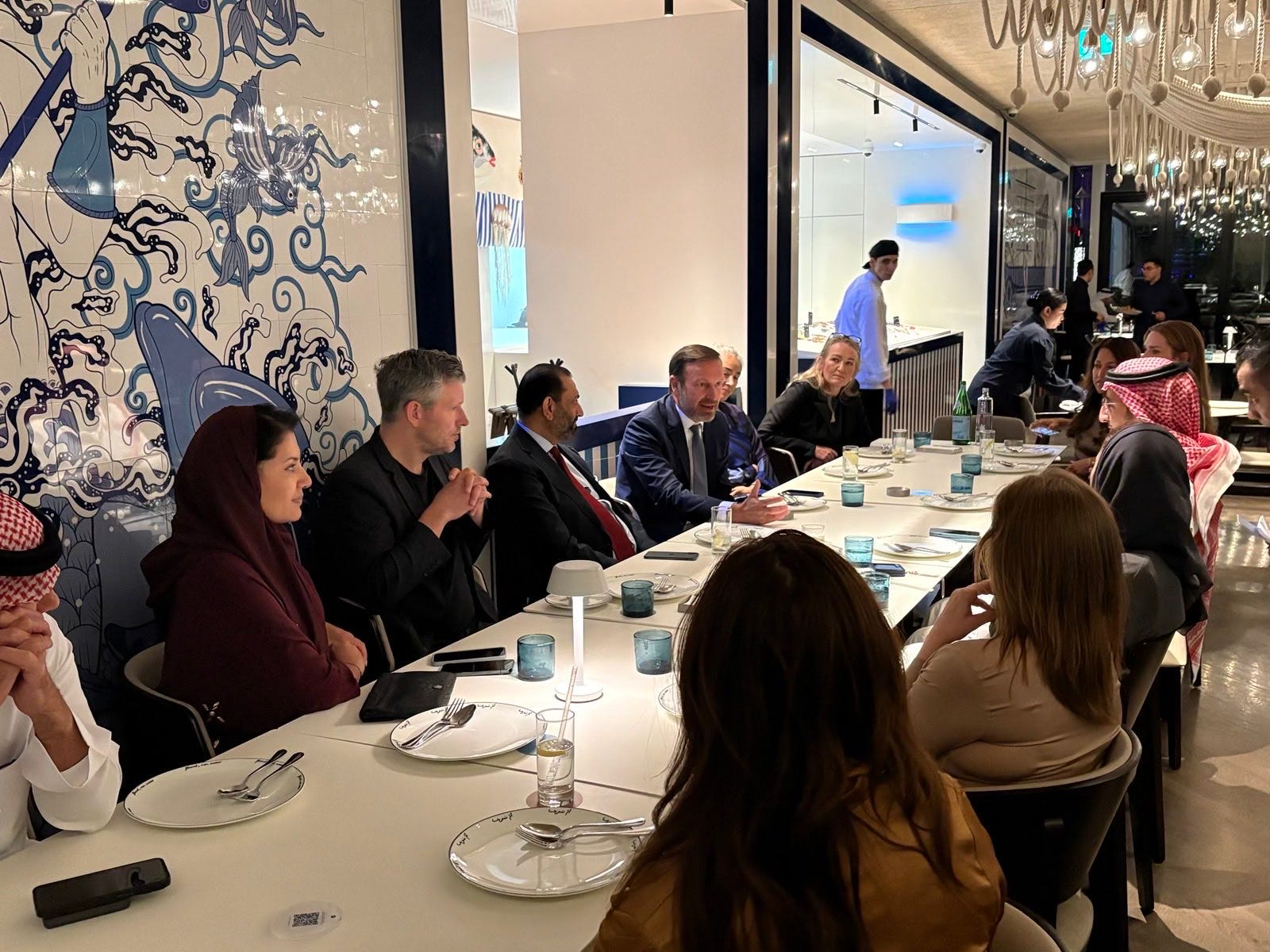
I was told to keep Monday evening clear and I would be summoned to the palace at some point during the night. But then, in the late morning that day, as I was readying for lunch with longtime Saudi diplomat, Adel al-Jubeir, I was told that MBS was ready to meet me and asked if I could immediately come to the palace. I did, and after waiting there only a few minutes, MBS met me in a grand room, along with his Foreign Minister, National Security Advisor and Princess Reema. He began with a long recitation of the history of U.S.-Saudi relations and how important our partnership is. He finished by stressing his support for America’s global leadership, for which he believes there is no alternative. I told him I agree that our nations are inextricably linked, and that I want to think about how to bring back this partnership and resolve our disagreements.
For the next hour, we had a candid discussion about American values, domestic political dissent and Saudi Arabia’s financial support for the Trump family (Trump’s companies have done deals in the Kingdom recently and Saudi Arabia is a key investor in Middle East envoy Jared Kushner’s private equity fund). He defended both his campaign of repression (as necessary to prevent a revolution against his social reforms, he claimed) and his Trump family investments (just business deals, he said). I imagine he seldom has vocal critics like me in his palace, but he didn’t shy away from a spirited discussion. There was, of course, no meeting of the minds, but I believe it’s important for him to understand that his nation’s relationship with America will remain fragile as long as political opponents are hunted and Trump investment opportunities are favored.
We spent the second hour of our meeting discussing Iran and Yemen. He knew, of course, that I have long opposed Saudi Arabia’s military intervention in Yemen. So he didn’t try to convince me - as he has been trying to convince Trump - that the U.S. should support his current ground campaign there with air cover. But I did concede that comparing today’s conflict to the prior era of fighting was not fair. The truce in Yemen was only interrupted because of Trump’s war in Iran. The Houthis, in order to support their ally Iran, began to fire at ships in the Red Sea and moved to control more territory along the Bab Al Mandeb Strait - along with sending missiles and drones into Saudi Arabia, in response to Trump’s attacks on Iran. I do not think it’s in Saudi Arabia’s interest to restart a long ground war in Yemen, but I understand they need to defend themselves from Houthi attacks. I told him that.
Missiles overhead
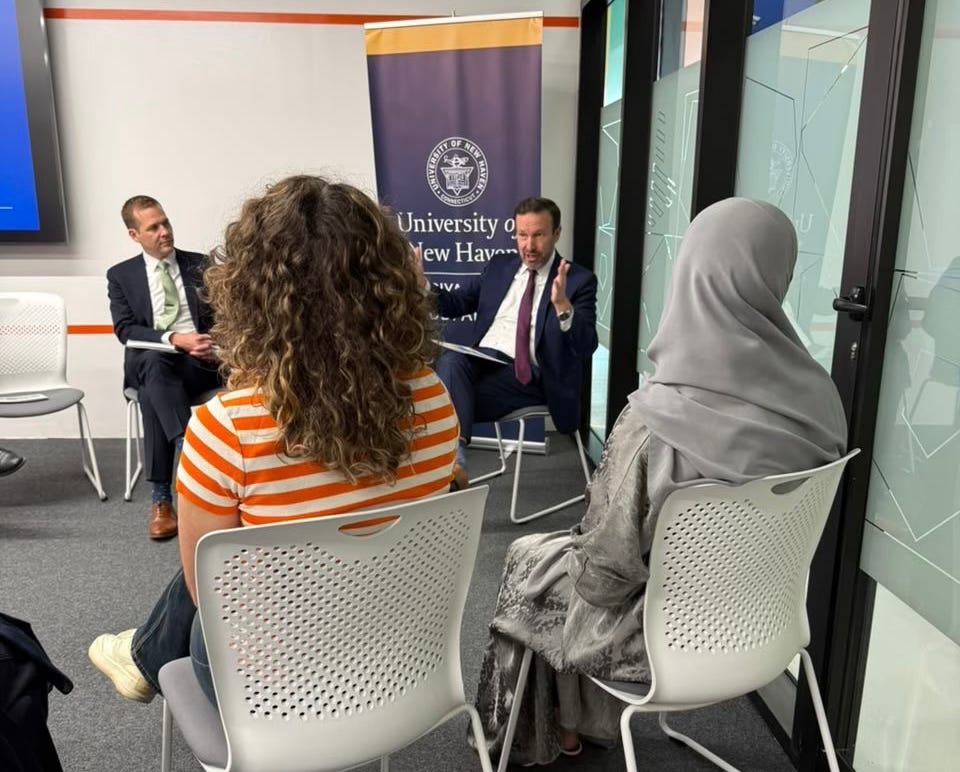
Over the rest of the day Monday and through Tuesday, I met with local Saudi citizens and other members of the government (including the Foreign Minister and Energy Minister). I will admit that the social transformation happening in Saudi Arabia is real. After dinner on Tuesday with the Foreign Minister, I watched a group of women walking on the street together, one with her head fully covered, one with a lightly wrapped hijab, and one with no head covering at all. As many women were driving on the roads as men. Movie theaters were open and busy, and men and women sat together in cafes. This social opening is no excuse for tightened political repression, but it is real and meaningful.
As our departing flight drew closer, we took more urgent note of reports of nightly missiles being fired at Riyadh from Houthi-controlled territory in Yemen. These warnings, combined with the sight of the horrible damage to our embassy, was a reminder that the war Trump began in February has completely spiraled out of control. Yemen is a battle zone again. Saudi Arabia suffers nightly attacks. Thousands are dead and wounded in Lebanon as a result of a new war with Israel. All of this horror and carnage was a totally predictable result of Trump’s decision to go to war with Iran. And seeing it all for myself - wondering whether our flight would be able to leave as the Houthis targeted the Riyadh airport - reinforced for me, in a unique, personal way, the ongoing, compounding disaster Trump has caused.
That is why these visits are critical. And it’s why Hegseth and Trump are so deeply committed to stopping Members of Congress from seeing the consequences of the insane, voluntary war they started. They know that if more of us saw in person the immense damage done to U.S. bases, or had the chance to directly interrogate war leaders about their sure-to-fail war plans, support for the war in Congress would dry up fast.
Once on the plane home, my staff forwarded me more breaking news out of Saudi Arabia. A missile had struck the Riyadh airport, perhaps just prior or after our takeoff. Another disastrous result of a disastrous war.
Thank you for that clear travelogue, and for your actions for America. That was a brave trip.
You are a truly courageous man—a shining example of the kind of people we need as our leaders!