

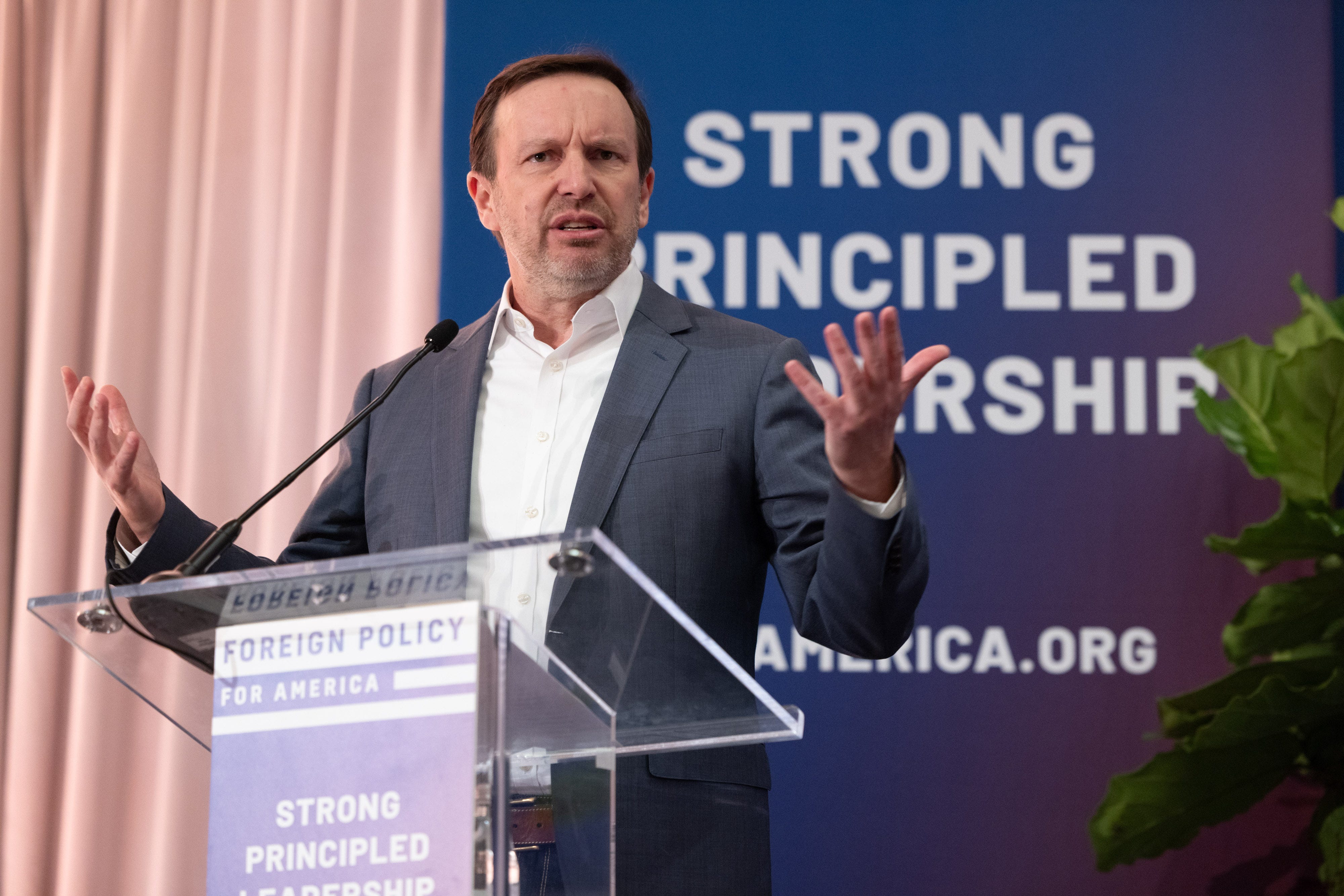
The Munich Security Conference this year felt a little bit like a funeral for the post-World War II order. Everybody at the conference recognized that, while that order had been decaying for years, Donald Trump is attempting to really deal a death blow. But while I was surrounded in Munich by people mourning the end of that order, I started wondering: how many people would show up if you held a funeral in the United States for the death of the post-World War II order? And I realized it’d be almost nobody - except for the exact same people who were with me at the Munich Security Conference.
That’s because, for as much good as this order has done, a lot of Americans have seen the rough edges of that order. They have seen how the post-World War II neoliberal economic order has consolidated economic power and social power to a tiny group of elites that have little concern for everybody else.
To most Americans, the economy they’re living in today - where social mobility is an afterthought and a small group of people control all the things that matter in their life - is a consequence of the decision we made after World War II to create an integrated global economy.
That decision created a transatlantic cult of profit and efficiency that has driven dignity out of work. It’s forced 40% of Americans into living paycheck to paycheck, so they don’t have enough money in the bank to even afford an emergency car repair. The post-World War II order is increasingly an order of scarcity for many Americans.
That order sold us on the benefits of a seamless world economy, a flattened, unifying world culture, and global citizenship. But what people really want is to be citizens of unique, local small places. And those places outside of DC, New York, San Francisco and LA are not terribly healthy today.
Our country has also gotten into disastrous war after disastrous war that Americans were told were essential to protect this nation and that world order. Instead, those wars just ended up getting a lot of Americans killed and wasting trillions of dollars. They distracted generation after generation of American leaders from fixing real problems at home. Many cheered President Biden when he declared that America is back. But people started asking, ‘Back for what? Is this more of the same? No thanks.’
I don’t mean to minimize the upside of this order.
Despite all of the fires that exist in the world, the trajectory of global deaths due to conflict is going down. That’s because our global order has prevented a lot of the frequent state-on-state violence that we saw prior to World War II. There have been tremendous advancements in our economy that have come from that order and many of those shared advances have helped people.
But we need to understand that we got stuck with Donald Trump a second time because Biden said we were ‘going back to what we had.’ And people said in response ‘No. We told you in 2016 we don’t want that. We want something new.’ If we, as progressives, don’t do a real accounting of what people really want from our engagement in the world, then we are not doing our work in this movement.
The right does a much better job than the left when it comes to a spiritual assessment of the state of the country. And people in this country are feeling really alone right now. They are feeling really powerless right now. We need a foreign policy that matches people’s sense of loneliness and powerlessness.
We would be misreading a lot of the essential elements of Donald Trump’s foreign policy if we just said it was about jingoism or xenophobia. Because a lot of what he talks about is really about power. His message is that these global forces, that we are endlessly told are just out of our control, can be inside our control. That in fact, we can exert power collectively on these forces.
Take global migration, which looked like a phenomenon that the United States could not control, as literally thousands of people poured over our borders on a daily basis. Donald Trump said ‘no, that is within our control. We can control that. And if you’re part of my coalition, we will control this force.’ Trump offered all sorts of terrible, xenophobic solutions: the suspension of asylum, the wall. But ultimately Trump was selling control.
What are tariffs about? Tariffs are fundamentally about control. Tariffs are saying, ‘this phenomenon that you thought was out of our control - the outsourcing of jobs away from the United States - we can control it with tariffs.’
Tariffs can also be an effective attack on the cults of profit and efficiency. The fact is, people are sick and tired of our entire economy being organized around maximizing investor returns and making things more and more robotically efficient. You can tell, because tariffs are inefficient. Tariffs signal that you care about something - in this case, domestic job creation - more than you care about profit. People noticed that the big corporations were crowing against the tariffs. That was a good thing, as far as they were concerned.
Now, Trump’s ham-handed tariffs don’t work. You can’t bring jobs back to this country without combining protectionism with incentives for domestic production. But we have to recognize Trump’s foreign policy conveys a message of powerfulness - just as Trump’s entire movement is a movement about connection and people finding a home with each other.
And so when progressives design our foreign policy, we have to start with a message that empowers Americans and empowers local communities. That means a purposeful effort with our allies in Europe to break up concentrated corporate power and put regulations around the poisonous technologies that are disempowering and corrupting families and kids. It means proving, across the Atlantic, government can be powerful in protecting you from harm, whether it comes from social media, AI, or crypto currency.
Thus far, people feel adrift because government has not been able to protect them from the harms of new technology. That means we need a responsible economic nationalism. We need to decide that yes, we are going to create a distinct American economy. We are going to decide to have a certain set of industries and jobs here at home. We are going to combine domestic manufacturing with a breakup of concentrated corporate power. When we succeed, that may even mean that those hollowed out local communities, that serve as an avatar for what was wrong about the post-World War II global economic order, become powerful again.
Finally, we have to bring a laser-like focus on corruption, in cooperation with our transatlantic allies. We need to decide that we are just not going to accept that a handful of corporations and billionaires and millionaires control our politics.
That kind of economy brings a sense of political powerlessness. People say, ‘I work hard at my job and I don’t advance, but I try to step foot inside politics and I can’t make a difference either,’ because our politics is corrupted by concentrated political power as well.
If we have a domestic message of taking on corruption, taking on concentrated power, and building a responsible kind of economic nationalism, that will empower the next set of progressives leaders to reenter the world. But if people don’t feel powerful here at home - if they feel alone and disintegrated and atomized by the technology that cycles us into withdrawal - then they are going to continue to follow leaders who say, ‘let’s just focus here at home and engage in pugilism against our allies.’
We have to build an answer for Americans who have been scratching their head about who our engagement with the world serves. They have come to believe that it serves the folks who make things for the Department of Defense and profit off of war. They have come to believe that it serves the big, powerful corporate interests. But we can build a new vision of America’s integration with the world that first and foremost serves the poor, the disenfranchised, and the middle class - the average workers here at home.
Dems need to detach from Israel, AIPAC and Crypto and Fetterman, Schumer right away
People have no idea what tax rates were on the wealthy prior to 1980. Propaganda has been winning the messaging for way too long. Bernie started to wake some people up, and now even more people are finally waking up. We need to get back to many Progressive things that move society forward and not the magical "center" that the Overton window keeps moving farter to the right. But we need to do it carefully as too many people still don't pay attention to reality.